08 / Wildlife & plants

There is more life here
than first meets the eye.

From mountain birch and small birds to the north’s elusive carnivores. A nature companion for your daylight hours, not a list of promised sightings.

Know what you’re looking at

Wild lives.
Honest expectations.

These are introductions to northern nature and Sweden’s wildlife. They are not reports of current local sightings. Our aurora tour is not a wildlife safari.

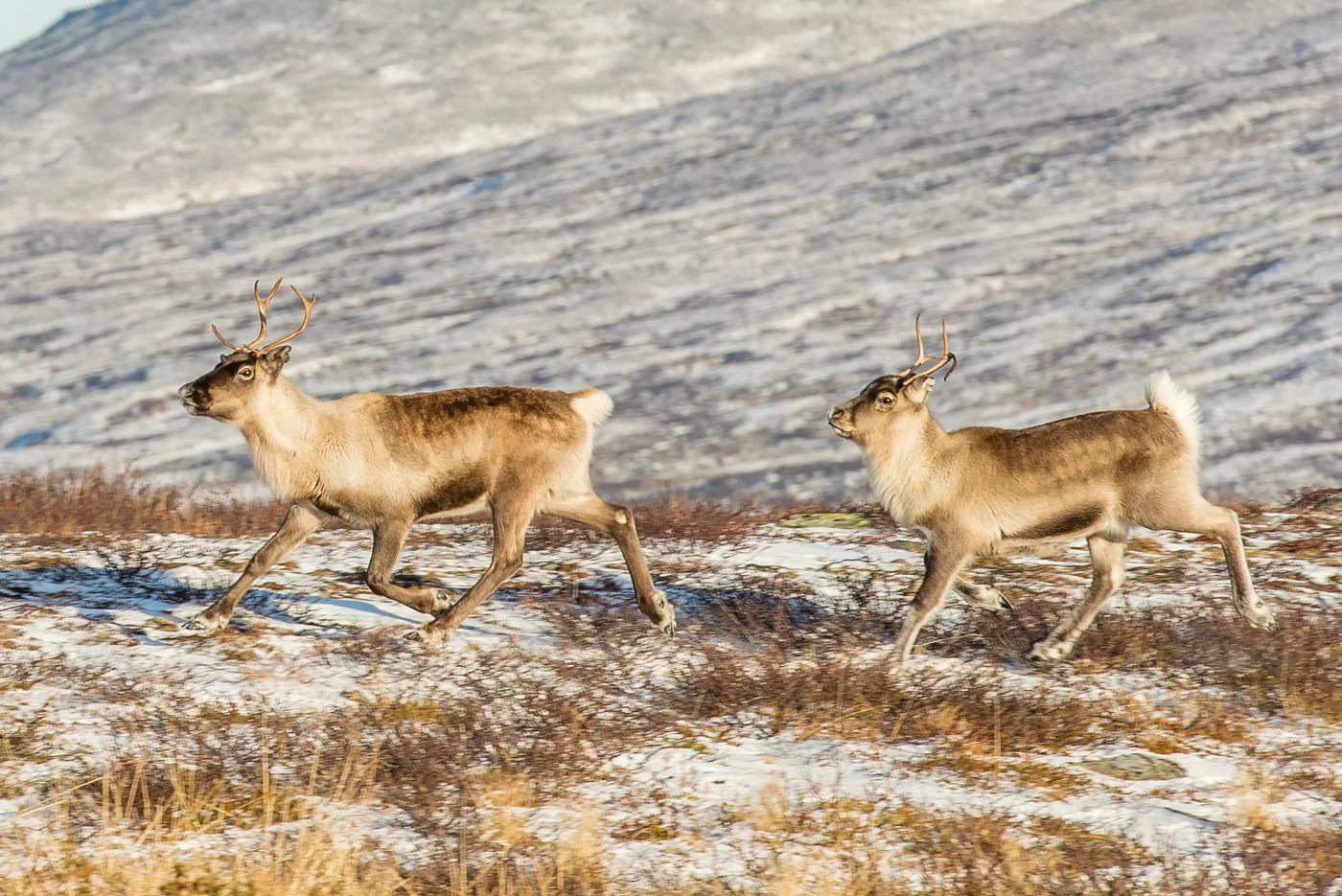
Two reindeer moving across a rocky slope in Jämtland
Reindeer in Jämtland, Sweden
Photo credit

Reindeer Ljungris October 2014 02.jpg by Arild Vågen · CC BY-SA 4.0. Resized; cropped to fit the layout.

A living herding landscape

Reindeer

Reindeer are central to the ongoing Sámi husbandry around Abisko. Free-ranging herds are not an invitation to approach; give animals and herders space.

What to expect as a visitor

Choose a hosted encounter if meeting reindeer matters to your trip. Follow the host’s instructions.

Read the species or place source
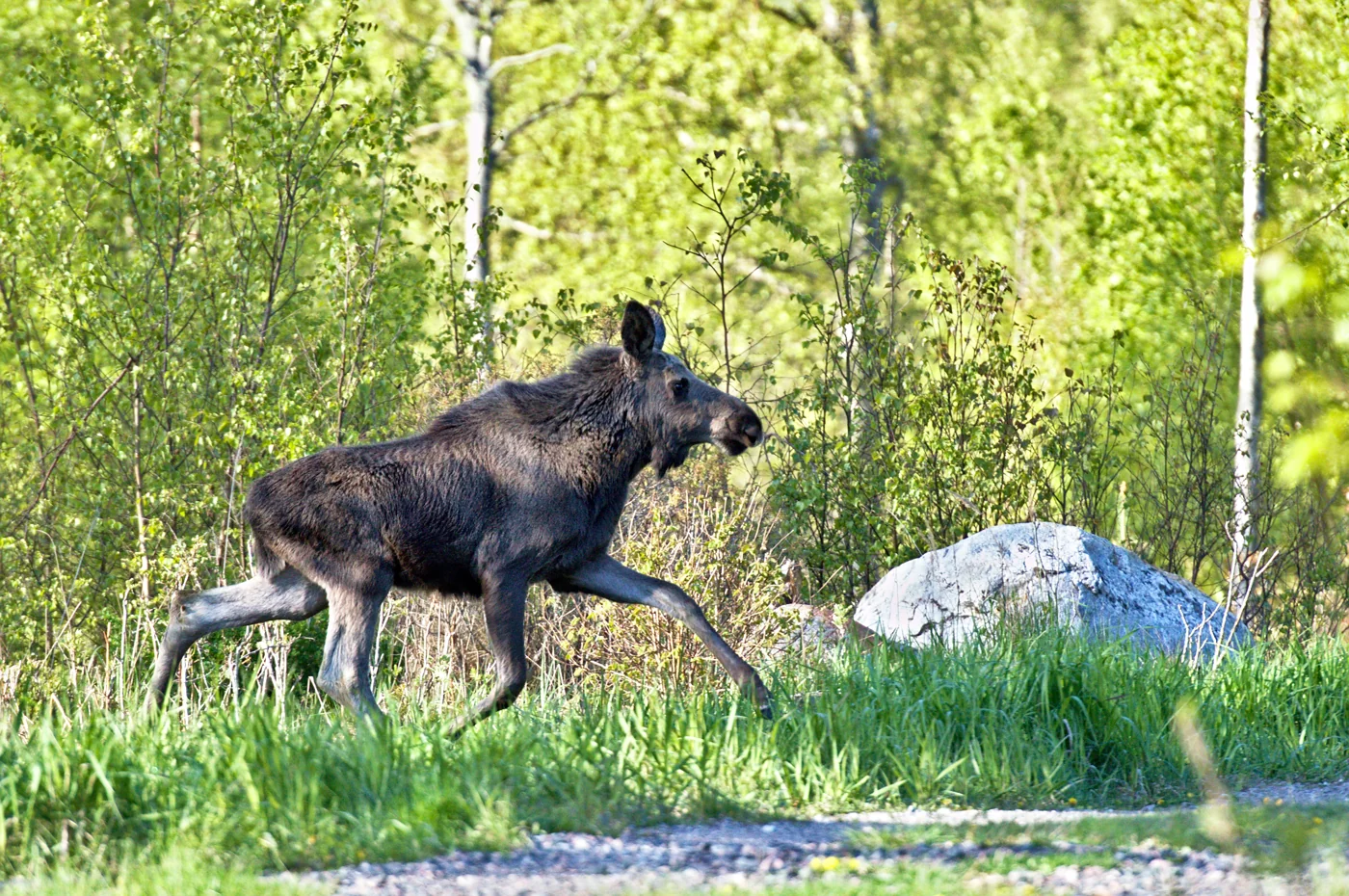
A young moose stepping through green woodland on Ornö
Young moose on Ornö, Sweden
Photo credit

Älg (Alces alces) på Ornö.jpg by Hangsna · CC BY-SA 4.0. Resized; cropped to fit the layout.

Woodland giant

Moose

The moose is the largest deer species. Woodland around the north offers habitat, but seeing one is a matter of circumstances and luck.

What to expect as a visitor

Watch from a distance. Never approach an animal for a photograph or stop in a traffic lane.

Read the species or place source
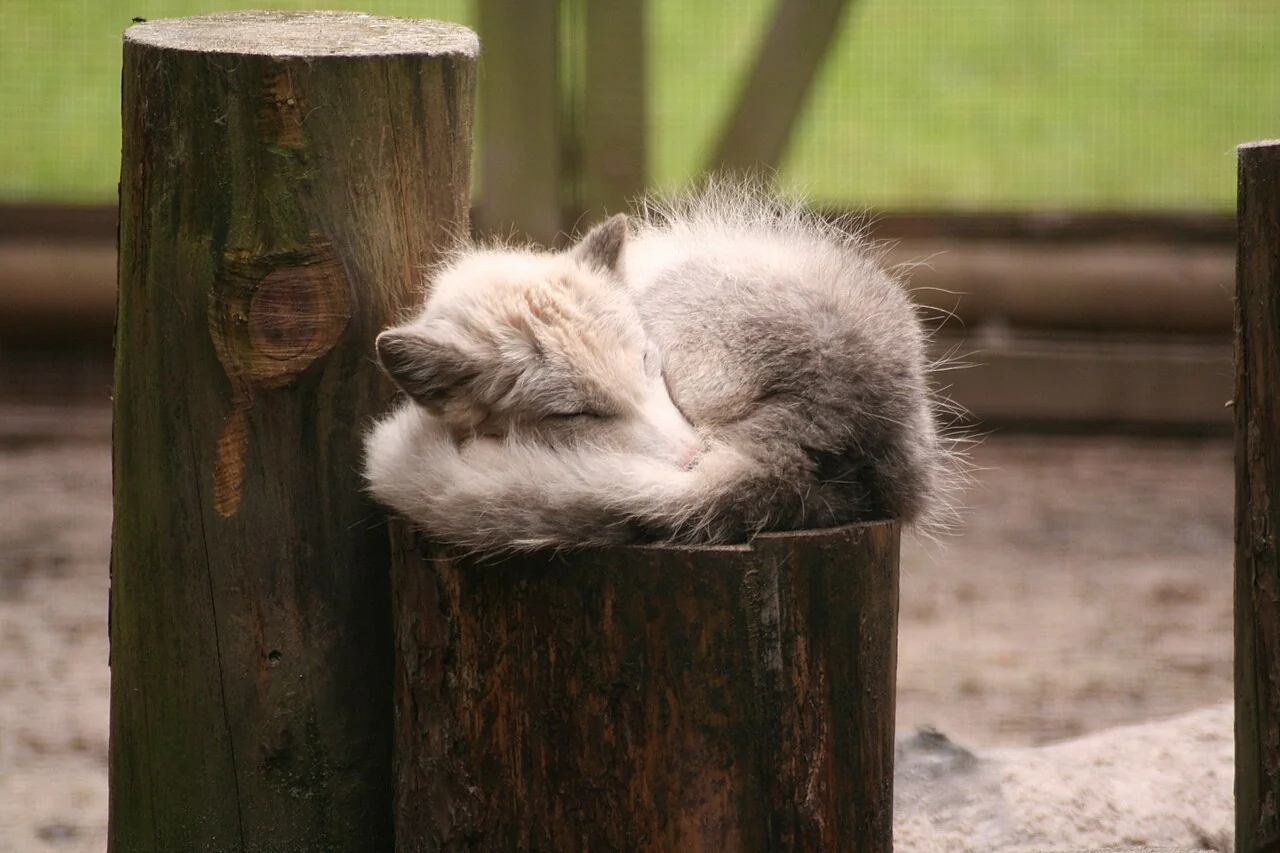
An Arctic fox in summer coat curled on a wooden platform at Wildpark Silz
Arctic fox · Wildpark Silz, Germany
Photo credit

Silz renardpolaire1.jpg by Traroth · CC BY-SA 3.0. Resized; cropped to fit the layout.

Life above the tree line

Arctic fox

A small fox adapted to tundra and open mountain country, with insulating fur and fur-covered foot pads. Lemmings are an important food source.

What to expect as a visitor

A sensitive species, not a promised attraction. Do not seek out dens, leave food or disturb an animal.

Read the species or place source
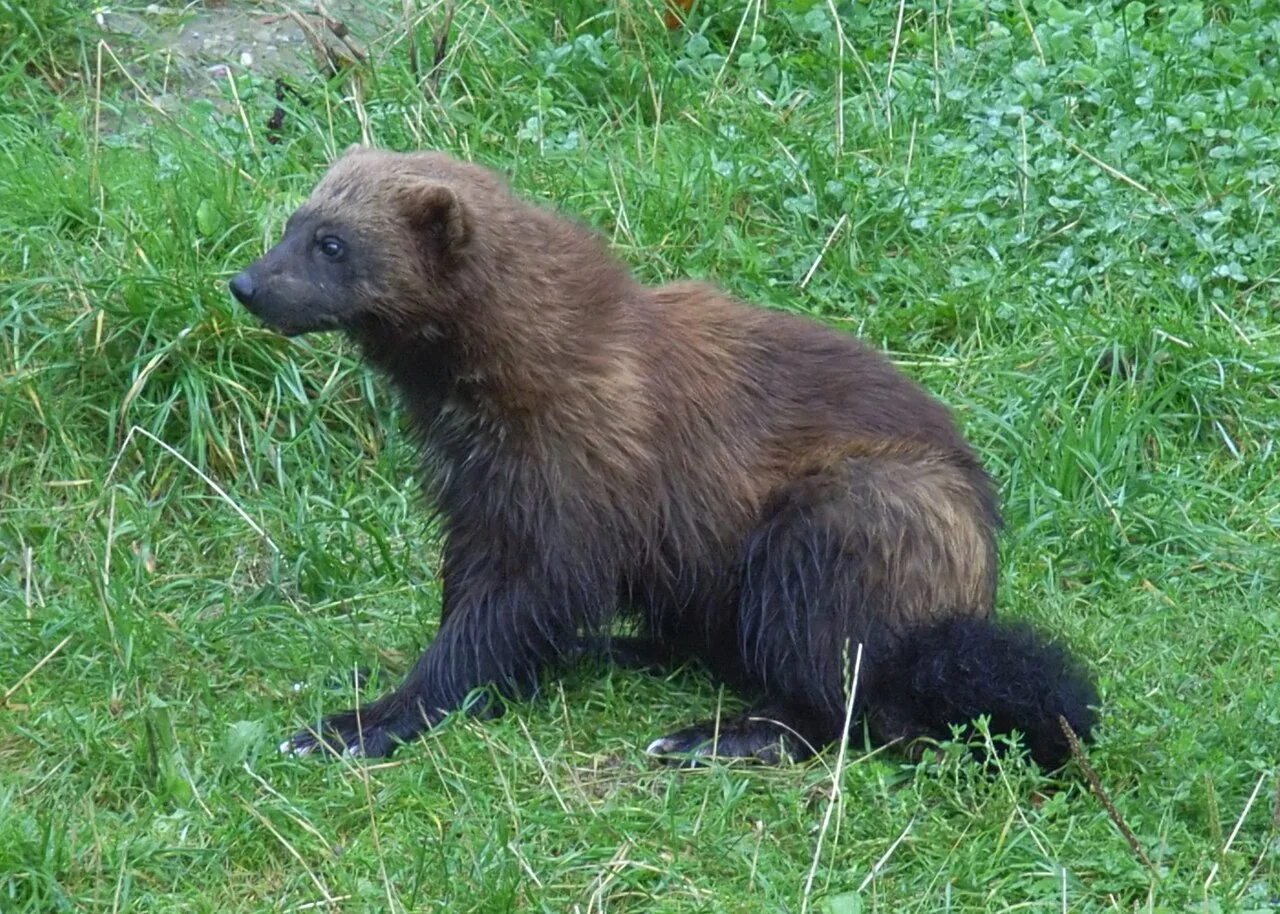
A wolverine in grass at Olderdissen wildlife park
Wolverine · Olderdissen wildlife park, Germany
Photo credit

Gulo gulo 2.jpg by Zefram · CC BY 2.5. Resized; cropped to fit the layout.

The quiet scavenger

Wolverine

A member of the weasel family found in Swedish mountain areas and parts of the northern interior. Scavenging plays an important part in its life.

What to expect as a visitor

An elusive animal. Enjoy learning about its role without expecting to encounter one on an aurora outing.

Read the species or place source
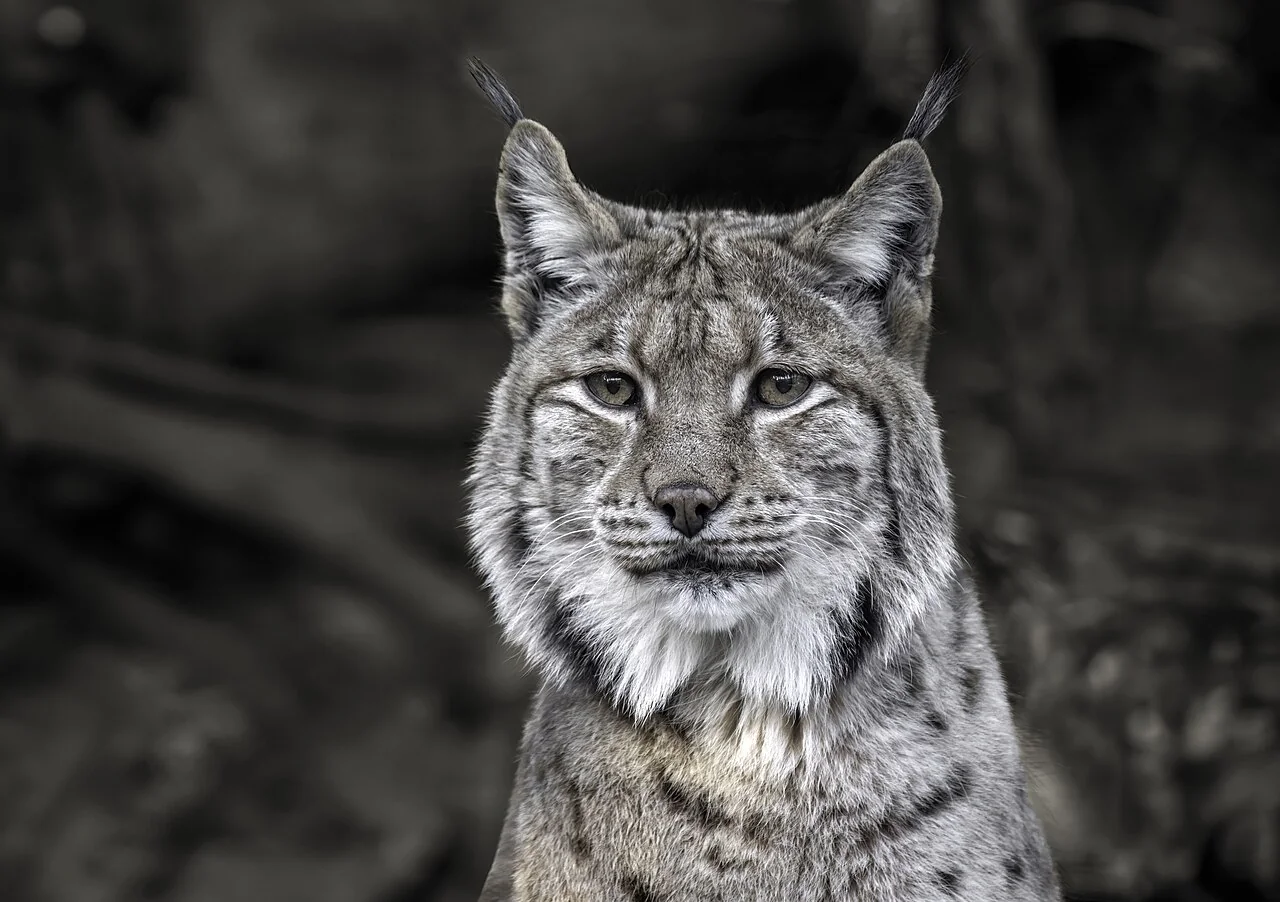
Black-and-white portrait of a Carpathian subspecies of Eurasian lynx at Alpenzoo Innsbruck
Eurasian lynx · Alpenzoo, Austria
Photo credit

Portrait of a Carpathian Lynx.jpg by Wilfredor · CC0. Resized; cropped to fit the layout.

Sweden’s wild cat

Eurasian lynx

The tufted ears and short tail belong to the Eurasian lynx. This solitary predator occurs across Sweden. “Arctic cat” is not a separate local species.

What to expect as a visitor

Treat a sighting as exceptional. Keep your distance and leave it an undisturbed route away.

Read the species or place source
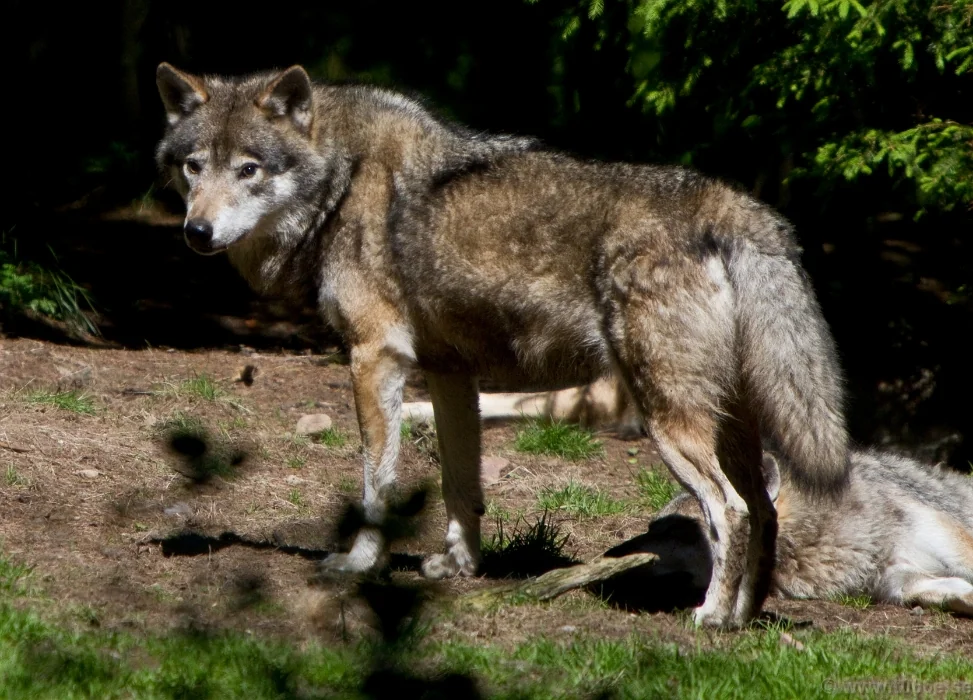
A grey wolf standing on a rock at Nordens Ark wildlife park
Grey wolf · Nordens Ark, Sweden
Photo credit

Nordens ark varg Canis lupus (5374569687).jpg by Tobias from Sweden · CC BY-SA 2.0. Resized; cropped to fit the layout.

A wider Swedish story

Grey wolf

Wolves in Sweden are concentrated mainly in the central parts of the country, with populations also established farther south.

What to expect as a visitor

Do not plan a Kiruna–Abisko holiday around seeing wolves. This is nature context, not a local wolf-watching promise.

Read the species or place source
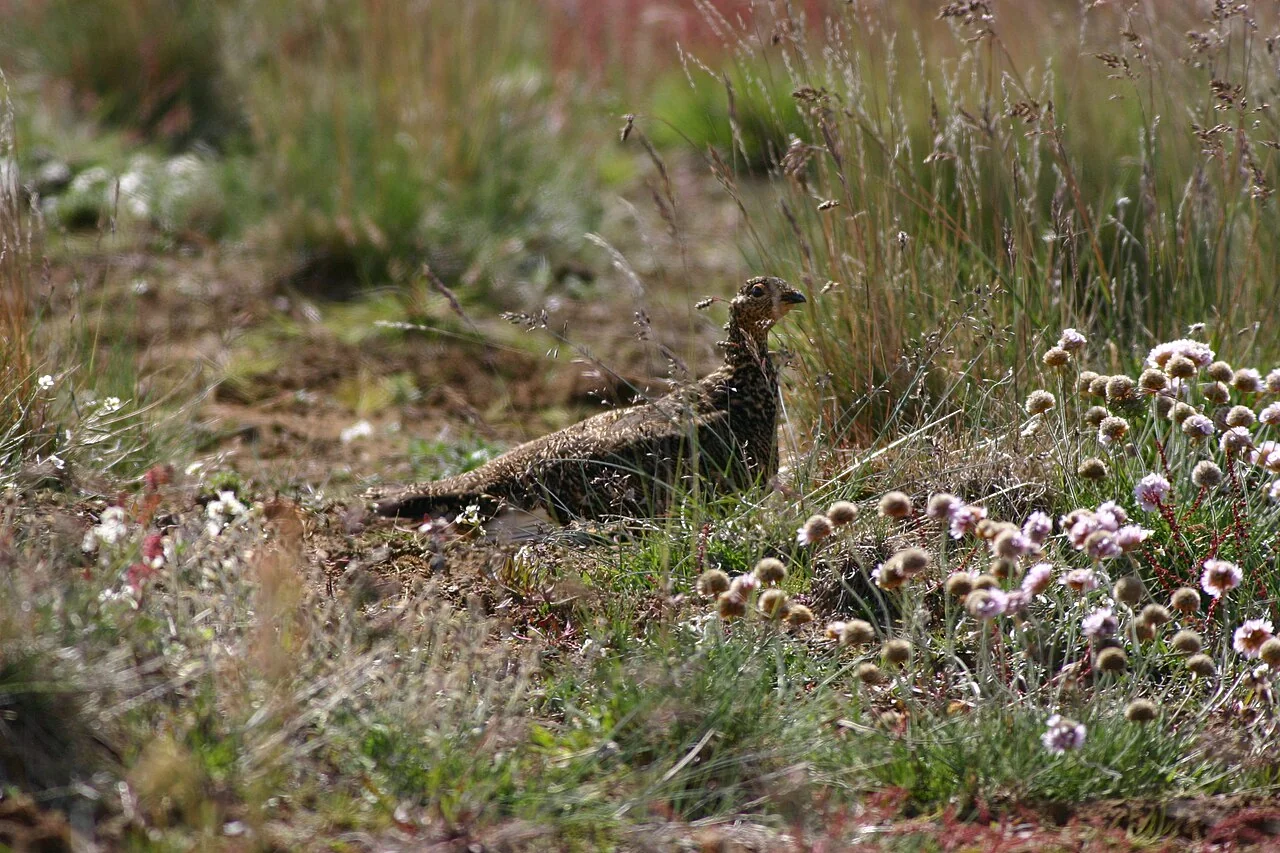
Rock ptarmigan among low-growing plants
Rock ptarmigan · species photograph
Photo credit

Fjällripa - Flickr - Ragnhild & Neil Crawford.jpg by Ragnhild&Neil Crawford from Sweden · CC BY-SA 2.0. Resized; cropped to fit the layout.

Look beyond the large animals

Rock ptarmigan

The Abisko area’s nature includes birds such as rock ptarmigan, as well as mountain lemmings and other small creatures. Slowing down reveals more than a hurried animal checklist.

What to expect as a visitor

Bring binoculars, stay on suitable routes and avoid disturbing birds or following them off trail.

Read the species or place source

Look down, too

A small world
beneath a huge sky.

Abisko’s plants change the character of the landscape. In summer, take time to notice the details; in winter, the shape of the woodland still tells a story.

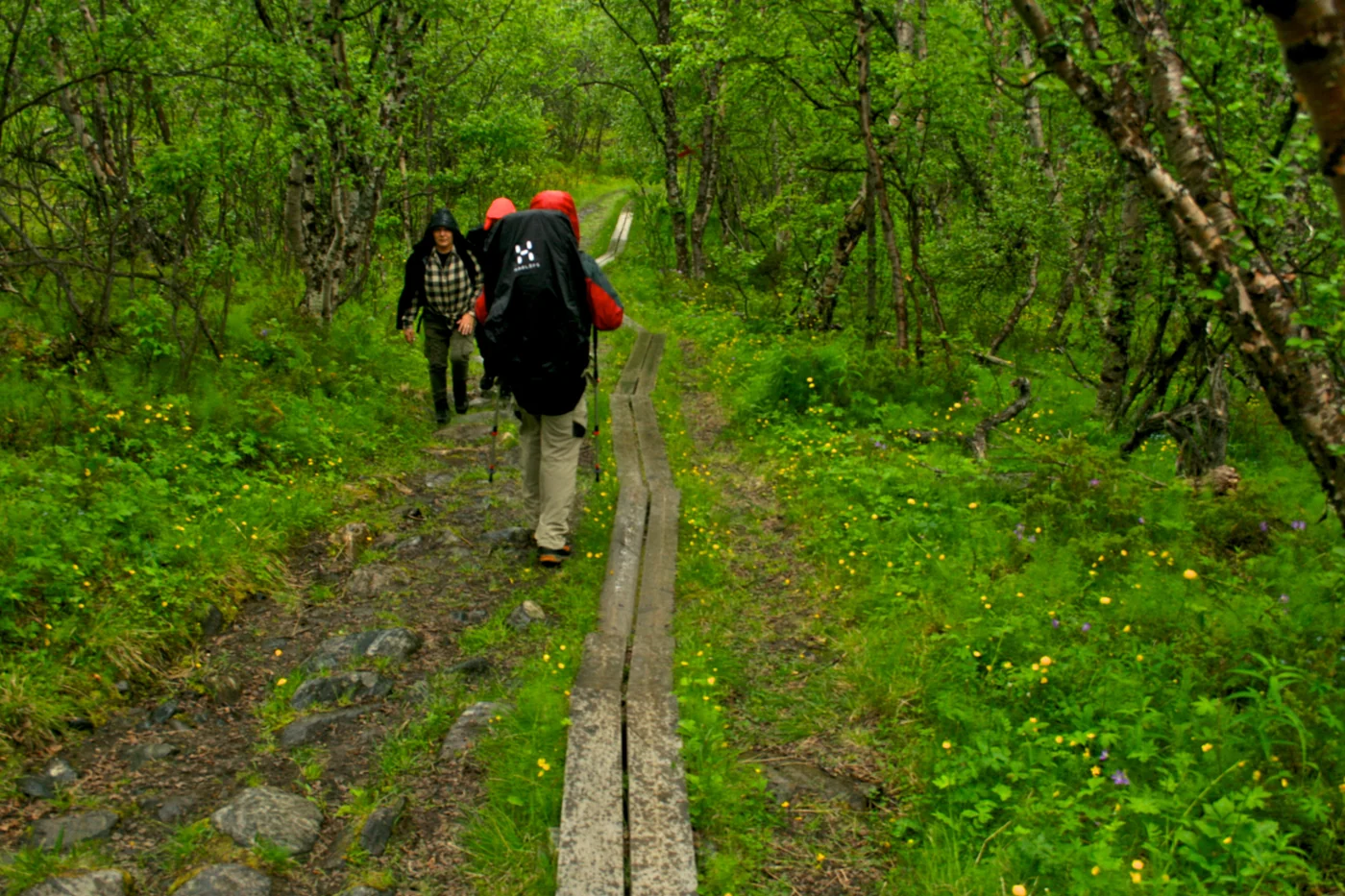
Walkers on a boardwalk through green mountain birch woodland in Abisko
Birch woodland · Abisko National Park
Photo credit

Abisko national park birch forest.jpg by Silverkey · CC BY-SA 3.0. Resized; cropped to fit the layout.

Mountain birch

Birch woodland gives way to heaths, meadows and open mountain terrain. Notice the shift in the landscape as you travel, without treating higher ground as an invitation to leave a safe route.

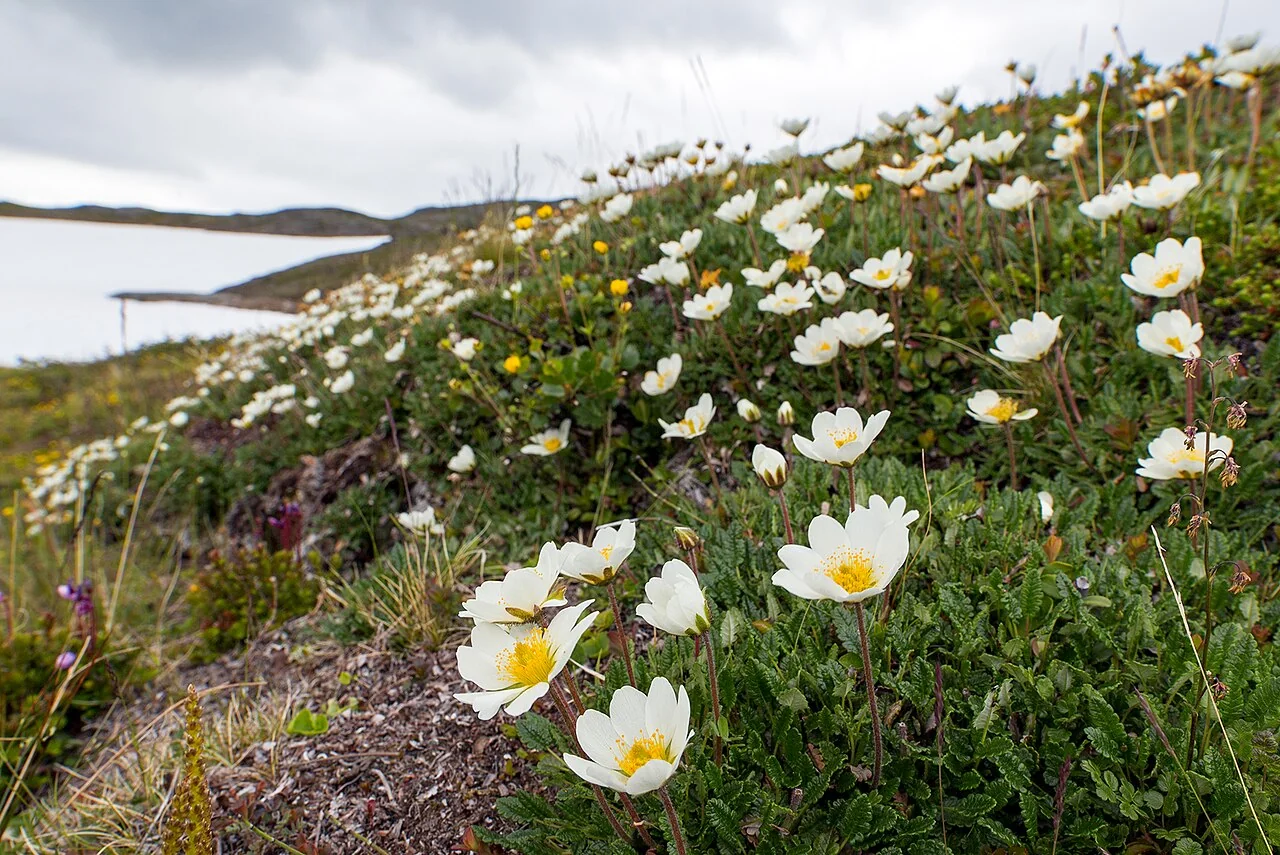
White mountain avens flowers covering a slope above water in Padjelanta
Mountain avens · Padjelanta, Sweden
Photo credit

Dryas-octopetala-7419.jpg by SiberianJay · CC BY-SA 4.0. Resized; cropped to fit the layout.

Mountain avens

The park’s flora guide names mountain avens as one of the plants indicating limestone-rich ground on Njullá.

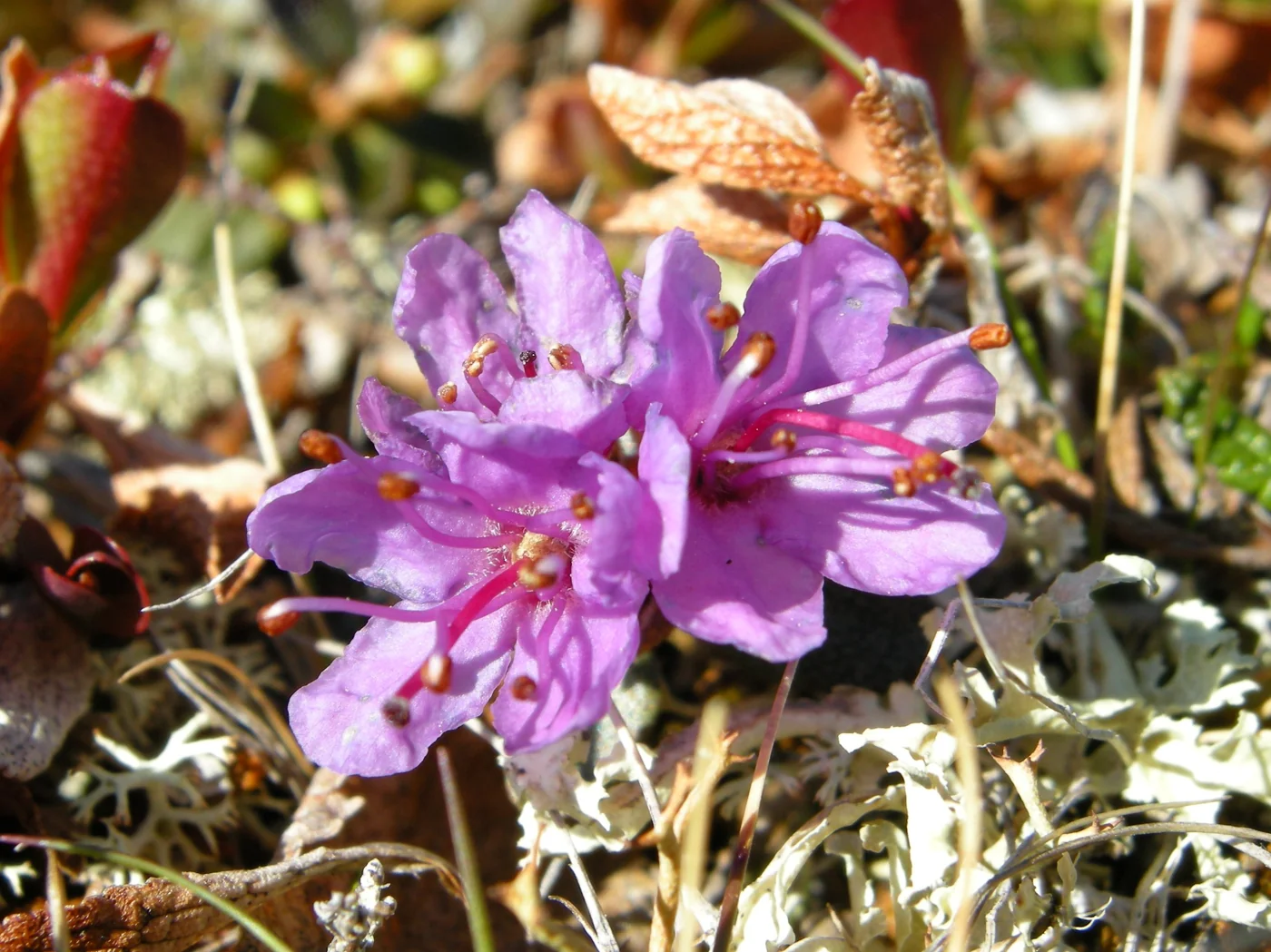
Purple flowers of Lapland rosebay in Porsanger
Lapland rosebay · Porsanger, Norway
Photo credit

Rhododendron lapponicum in Kolvik.jpg by Eaglestein · CC BY-SA 3.0. Resized; cropped to fit the layout.

Lapland rosebay

Another plant associated with that limestone-rich ground. The detail of the vegetation can reveal something about the rock beneath your feet.

Alpine flowers & orchids

Abisko supports a rich mountain flora, including orchids. Learn from the park’s guide and enjoy plants where they grow; this page is not a foraging or picking guide.

Explore Abisko’s plant life

A worthwhile stop in any weather

Naturum Abisko.

The visitor centre introduces local plants, animals, geology and cultural history. Check opening times and current activities before travelling.

Plan a Naturum visit

Leave the encounter on their terms

Observe. Don’t pursue.

Keep distance, do not feed wildlife and never share sensitive den or nest locations. If your presence changes an animal’s behaviour, give it more space. Bring home photographs and memories, leaving the place undisturbed.

Go with Swedish Aurora

Discover the north by day.
Join us after dark.

Make your trip about more than a single sighting. Our guided aurora evenings add local knowledge, warm drinks and photography help to the experience.

Operated by Snow Dog Arctic Adventures · Booking opens Snowdog’s full range of adventures.